A vision-impaired
person of sound mind experiences
phantom images (visions) in
their visual field.
National helpline
1300 121 123

A vision-impaired
person of sound mind experiences
phantom images (visions) in
their visual field.




Bob Dylan was prescient when he foresaw the shift in the civil rights movement of the 1960s. However, it seems, the same cannot be said for the status of Charles Bonnet syndrome.
Despite countless papers published on CBS in diverse health and medical journals over decades, it appears that the word is not adequately reaching direct health service providers. Regular accounts from family members “ in Australia and abroad - report frustration and surprise that doctors and allied health (who oversee the well-being of their loved one) are often unfamiliar with CBS.
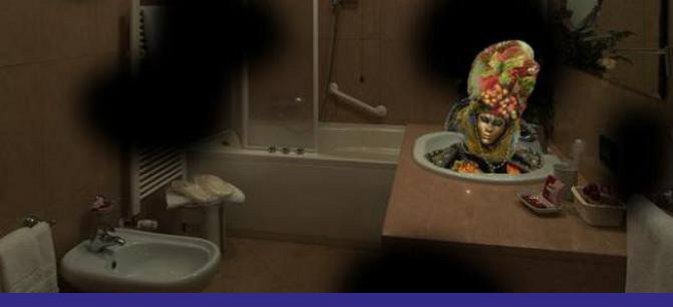
This state of affairs is illustrated in a soon to be published clinical paper from the Journal of Emergency Nursing. It reports on a case where an 85 year old woman living with glaucoma presented at an emergency department reporting unusual and distressing visual experiences: namely, seeing a male and female figure and swarms of snakes within her home.
The author of the paper, Assistant Professor Lynn Wiles, of the School of Nursing, made the following comment in relation to the case:
Although CBS has been documented in the geriatric, neurologic, psychiatric, and ophthalmologic literature, none of the health care providers at the receiving emergency department was aware of this condition.
And herein lies the problem. Despite emerging CBS awareness campaigns and clinical guidelines being established, it seems that the information is not filtering down to front line health service providers at hospitals, medical clinics and aged care facilities.

(Above: This graphic image courtesy of Brookes' novel, A Thousand Coloured Castles, depicts both the particular situation of the 85 yr old woman and the plight of CBS in general.)
Perhaps, like the civil rights movement that so moved Dylan, it calls for a ground swell of support from the lay public (backed by politicians and other prominent figures) to lift the medical veil that has hidden CBS for way too long. It is high time that there was a medical and health care system that is knowledgeable of, and responsive to, those affected by CBS.
When heartburn occasionally strikes, one can turn to antacids to neutralise the acid in the stomach. However, in more severe or persistent cases of heartburn or reflux, there are a group of medications known as Proton Pump Inhibitors (PPIs). Their role is to reduce the amount of acid the stomach produces and are one of the most widely prescribed medications in the world. The function of the PPI is very similar to that of antacids but they are longer acting and target a different mechanism.
There is some preliminary evidence suggesting that those living with macular degeneration may be more likely to develop Charles Bonnet syndrome (CBS) if they are also taking a PPI medication. Such medications includes Omeprazole (eg. Losec, Prisolec, Zegerid), Esomeprazole (Nexium), and Lansoprazole (Prevacid, Zoton).
PPIs are generally considered safe and well tolerated by most users but medications can, and sometimes do, come with side effects. Normally, PPIs are not able to enter the brain (due to the 'blood-brain barrier') and so do not affect the central nervous system. However, two recent studies tend to indicate that damage to the retina in macular degeneration cases offers a unique entry point for such medications. This is where they can potentially affect the brain and increase the likelihood of CBS.
In 2012, there was a case report of a man living with macular degeneration (but CBS-free) who headed to the emergency ward with bleeding of stomach ulcers. Part of the hospital's treatment involved use of a PPI. Post-discharge, while heading home in the taxi, he began to experience vivid phantom images such as 'flowers silently blooming out of the air'. It was only when this drug was discontinued that these visual disturbances began to clear up.
In the following year, a small American study linked PPIs to visual hallucinations in patients living with the wet form of macular degeneration (Hanneken et al, 2013). In some, the CBS only began once the PPI was introduced, whilst in others who already had CBS, their experiences become more significant after PPI use.
Building upon this finding, a team of researchers from Portugal clinically assessed this theory with 471 patients (Leandro et al, 2017). Leandro and his colleagues found that those living with wet macular degeneration were twice as likely to develop CBS symptoms when also taking an oral PPI.
In an excerpt from their paper it states:
"...hallucinations are not cited as a frequent adverse effect of these drugs and Food and Drug Administration (FDA) prescribing information on Omeprazole categorizes (visual) hallucinations as a rare event, occurring in <1% of patients. However, the percentage of patients with wet macular degeneration reporting visual hallucinations while using PPIs was as high as 56% and these drugs may confer a two times greater risk of CBS development." (p.4141)
It is the opinion of the lead author, João Leandro, that patients with the wet form of macular degeneration should be informed that PPIs can increase the risk of visual hallucinations. This finding was found regardless of age and degree of vision loss. However, he cautioned that "we cannot make any specific recommendation because we do not know whether discontinuing these drugs may decrease the frequency of the hallucinations, or even stop them." It is also not yet known whether similar occurrences are likely or indeed possible in eye diseases where there is no retinal damage such as in the case of glaucoma.
The Charles Bonnet syndrome (CBS) Foundation recently met with members of the educational team at the Royal Australian College of General Practitioners (RACGP). During that meeting, there was an in principle agreement that raising awareness of CBS amongst Australian GPs would be a worthy initiative.
While the process is still in the preliminary stages, it is envisaged that in due course CBS learning materials will be developed for Australian doctors. This would include a feature article on CBS for the profession's publication, Australian Journal of General Practice (formerly known as Australian Family Physician). This journal is sent to every GP in the country.
In light of a published study from Canada earlier this year that found 'a great lack of knowledge' of CBS among Canadian GPs (Gordon et al, 2018), the Foundation is delighted with the responsiveness of the RACGP to the CBS cause. Their planned initiatives are warmly welcomed and will certainly assist in improving service provision to the vision-impaired community.
As RACGP's proposed plans begin to take further shape, the Foundation will provide updates on the nature of these initiatives.
REFERENCE
Gordon, K. D., & Felfeli, T. (2018). Family physician awareness of Charles Bonnet syndrome. Family Practice, cmy006.
CBS IN AFRICA
Over the past 35 years, the CBS literature has been dominated by studies and case reports from European and English speaking countries. It is therefore refreshing to discover a CBS study undertaken in Eastern Africa.
Professor Yaswant Vagrecha, based at the School of Psychology at Addis Ababa University in Ethiopia, investigated vision-impaired university students (21 - 43 yrs of age). Vagrecha (2016) discovered the presence of CBS amongst the majority of such students. This research is valuable on three counts:
REFERENCE
Vagrecha, Y.S. (2016) Revisiting the Charles Bonnet Syndrome in Visually Impaired Students in Addis Ababa University, Ethiopia. Indian Journal of Community Psychology, 12(1): 1-8.
Page 10 of 14
The Charles Bonnet Syndrome Foundation is dedicated to raising awareness of CBS, what signs to look out for and how to better manage this condition.
As a charitable organisation, we rely principally upon memberships and donations to continue our work.
Please help us to support more people affected by CBS.