A vision-impaired
person of sound mind experiences
phantom images (visions) in
their visual field.
National helpline
1300 121 123

A vision-impaired
person of sound mind experiences
phantom images (visions) in
their visual field.
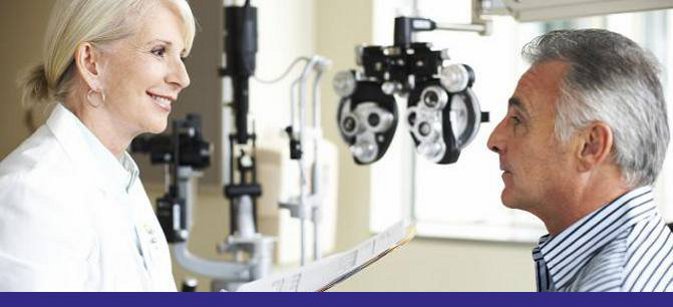
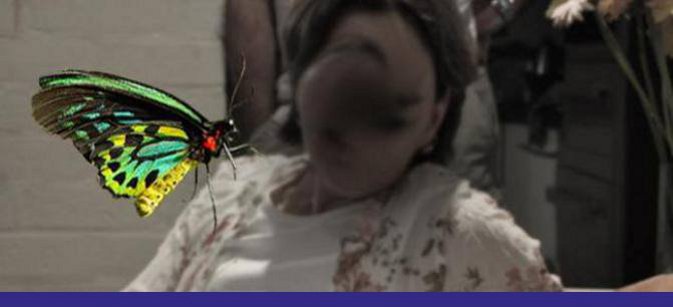


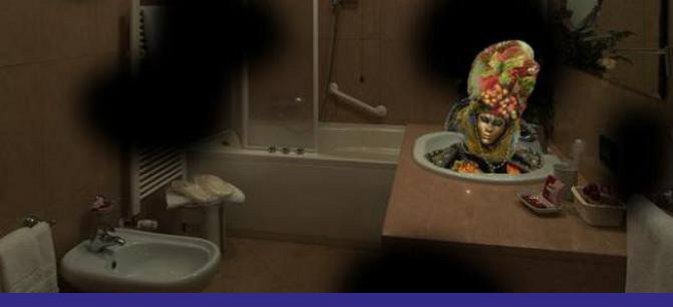


It is known that moderate to significant vision loss can be a notable risk factor for a person developing unusual visual experiences. Indeed, the vast majority of people living with Charles Bonnet syndrome will have some form of vision impairment. This often is due to eye injury or disease.
What is not so well known is that sometimes the cause of the visions can lie with the person's own prescribed medications. We are all aware that prescribed medication can sometimes come with unforeseen side effects. This can extend to seeing things that are not really there. One particular drug introduced or the interaction effects of multiple medications can occasionally set off Bonnet-like visions, especially in the elderly. In such cases, if the offending medication can be identified and switched (or discontinued) then the symptoms could be reversible.
This medication effect can also occur with a person who is already living with CBS. Suddenly, the person may experience a change in the actual content or frequency of their visions and find them unsettling in a way that they never had before. This situation can sometimes be a clue that another factor (eg. medication) may be at play.
The Foundation has previously commented on studies suggesting that people living with the wet form of macular degeneration are twice as likely to experience CBS if they are taking a proton pump inhibitor (a commonly prescribed medicine for reducing stomach acid/heartburn). Many drugs used to treat high blood pressure or various heart ailments (ie. beta blockers) have also been known to trigger visions of things that are not really there (Doane et al, 2013).
A 2015 study undertaken in France looking back over the past 30 years found an association between prescribed medications and hallucinations. This covered a wide range of drugs including not just the above medications but also antidepressants, sedatives and pain management drugs.
The point of drawing attention to this association is not to generate undue alarm but rather to be mindful that on rare occasions, the CBS-like experience may accidentally lie at the hands of a prescribed medication and to explore that possibility with your treating doctor.
REFERENCES
Doane, J. et al (2013). Visual hallucinations Related to Angiotensin-Converting Enzyme Inhibitor Use: Case Reports and Review. The Journal of Clinical Hypertension, 15(4): 230-233
Leandro, JE. et al (2017). The Charles Bonnet Syndrome in Patients with Neovascular Age-Related Macular Degeneration: Association with Proton Pump Inhibitors. Investigative Ophthalmology and Visual Science, 58(10): 4138-4142.
It will come as no surprise to learn that culture plays an important role in shaping us as human beings. Language, music, and fashions readily come to mind. To some extent, we are a product of the environment we are raised in.
As CBS reports start to emerge across the globe, the role of culture is becoming evident in the types of phantom images that people experience. A recent case in point comes from Sri Lanka. Earlier this year, a paper was published from that country documenting three cases of CBS where each experienced phantom images of animated devils or devil masks ('Sanni'), which were once commonly used for traditional healing rituals. The following image of a standard Sri Lankan devil mask is noted for its depiction of long, sharp teeth, bulging eyes and protruding tongue.

Above: A traditional Sanni mask of Sri Lanka
In the three cases of CBS reported by the psychiatrist, Dr. Anuradha Ellepola, the emergence of devil-like visions only occurred after the person developed significant vision loss. Their descriptions of the devils 'seen' were consistent with the features of the sanni mask (above). It is also interesting to note that in all three instances, the person had either previously witnessed Thovil or 'devil-dancing' in their childhood village or had some active role in this ritual.
Certainly in western contexts, it is not unusual for reported phantom images to include gargoyles or miniature elf-like beings. In India, CBS cases have included images of Hindu deities. In one report from Japan, the CBS-affected person had visions of daimyo gyoretsu (Japanese feudal lord's procession of the Edo era (ie. 17th to 19th centuries). These examples suggest that some forms of phantom images experienced by those living with CBS may be due to lived experience within a certain social and cultural environment.
We welcome any personal accounts to share on this topic via Facebook or
REFERENCE
Ellepola, A. (2019) People who saw dark, fat devils with sharp teeth and bulging eyes- Charles Bonnet syndrome: A case series. Sri Lankan Journal of Psychiatry, 10: 16-18.
Today, October 10th, is the annual World Sight Day, which aims to focus on global blindness and vision-impairment issues. It keenly highlights that many eye problems worldwide could be prevented if there was greater access to eye health care resources.
On such an important day, it is a timely reminder that much untold and needless distress could be avoided if the eye health care sector began to sensitively discuss Charles Bonnet syndrome with their vision-impaired patients and forewarn that it may develop down the track. Currently, those affected by CBS remain the invisible people of the eye health domain. Their plight is far too often overlooked. Consequently, the inner suffering persists for much longer than is necessary. On World Sight Day, may we collectively give a voice to the unspoken.
Page 7 of 14
The Charles Bonnet Syndrome Foundation is dedicated to raising awareness of CBS, what signs to look out for and how to better manage this condition.
As a charitable organisation, we rely principally upon memberships and donations to continue our work.
Please help us to support more people affected by CBS.