A vision-impaired
person of sound mind experiences
phantom images (visions) in
their visual field.
National helpline
1300 121 123

A vision-impaired
person of sound mind experiences
phantom images (visions) in
their visual field.

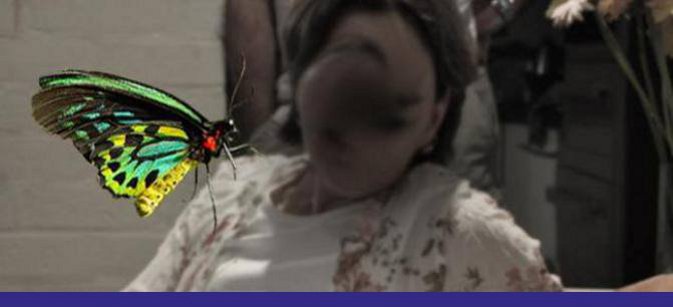
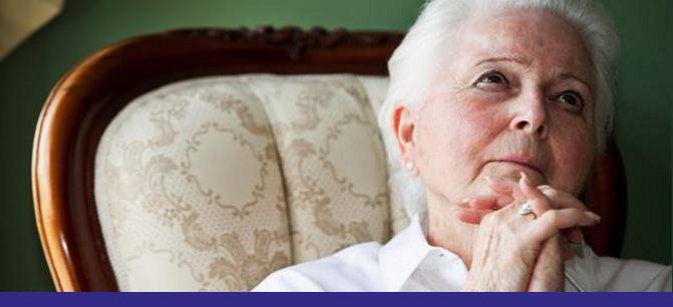

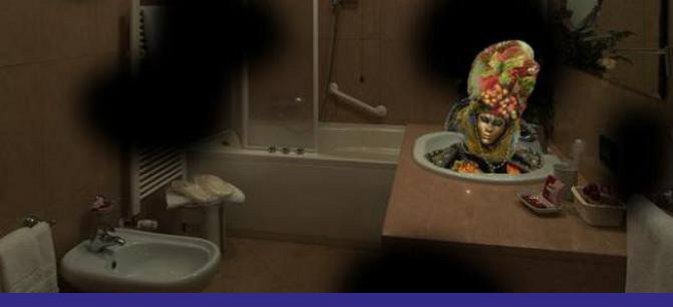


An exhibition that includes an installation focusing on Charles Bonnet syndrome has opened at the American Academy in Rome. Italian illustrator and visual designer, Francesco Zorzi, is the creator of the project, MACULA / The Theater is in the Mind.
MACULA is an immersive experience which explores the links between macular degeneration and Bonnet syndrome. Drawing upon the language of design and visual arts, Zorzi states: "MACULA literally draws the curtains to let you in their minds, to have a glimpse of the world through the eyes of their mind."
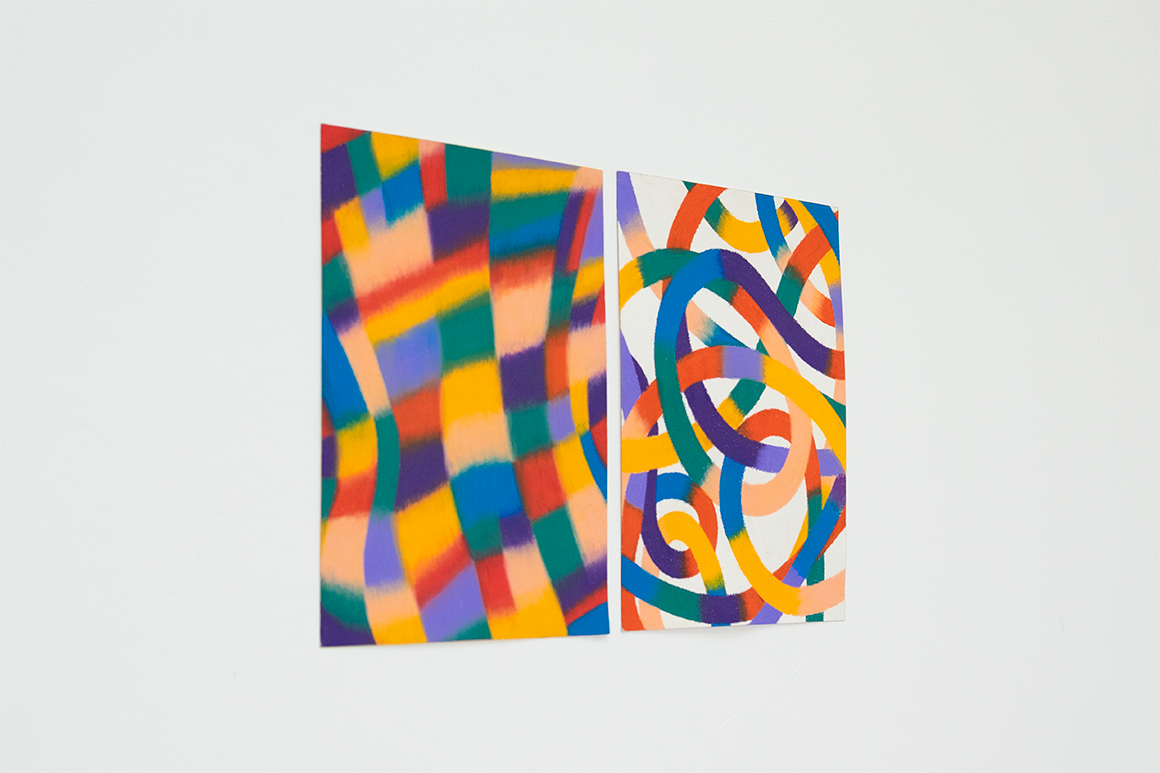

His work draws upon numerous transcripts of authentic CBS personal accounts. This includes:
I said, What are these things doing here? Because at first you think they are real things that you can touch. Then you realise that they are made out of¦ nothing.
Zorzi's exhibit is part of the annual event, Cinque Mostre (literally meaning: 5 exhibitions) which officially opened on February 20. Each year's Cinque Mostre has a particular theme; in 2019, it is Displacement. In this regard, CBS is a very good fit: not only in terms of perception but also the potential upheaval on emotional and self-identity fronts.

Displacement speaks to a core unsettling of one's life experience. Vision loss, combined with Bonnet syndrome, can seriously undermine one's sense of grounding. Everyday tasks can become a struggle. Perceptually, the lines between reality and fiction can become blurred. This blurring can lead to questioning one's own sanity and the associated anxiety that flows from that. Zorzi hopes that his work will generate an open discussion about CBS and in the process challenge associated taboos.
Cinque Mostre 2019 runs till the end of March. Entrance is free. For more information, click here
Charles Bonnet syndrome is the experience of uninvited visual phantoms appearing in those with some degree of vision impairment. The visual images seem to miraculously appear in one's field of vision. This can seem truly extraordinary when the person has significant vision loss:
"I don't get it... I can no longer read, I struggle to see what I'm doing with everyday tasks and yet I can see a man on a horse in my living room in exquisite detail."
The type of images experienced varies enormously: rows of multi-coloured lines or intricate patterns all the way through to figures, faces, animals or buildings. They are typically not under the person's control. Without any warning, these visual images tend to spontaneously appear and at some later point, suddenly vanish. They are known as visual phantoms because even though the visual images can appear to be incredibly rich and detailed, they actually have no true substance. The images are actually empty even though they seem real or life-like. Consider the following scenario. A CBS-affected person says to a loved one:
"Darling, I know this may sound bizarre to say but I'm seeing these large orange penguins all over the walls and ceilings. Are they actually there or are my eyes playing tricks on me?"
"Sweetheart, there's no orange penguins on the walls or ceilings... so I think your eyes are playing tricks on you."
Especially at the beginning of such unusual visual experiences, one recommended approach is that the person living with CBS is encouraged to reach out with their hand and try to touch what they see. Sometimes this can be a revelation:
"I extended my arm to reach out and touch one of the orange penguins but my hand went right through the penguin and smacked against the wall. I realised that even though that orange penguin looked unbelievably real, it was actually like a mirage."
This can provide the person with a direct experience of their visual phantom and provides confirmation that some things they see are not actually there. During this initial time when CBS can truly unsettle a person, this confirmation can help the person regain some sense of control and reduce their anxiety.
The next task is to slowly begin to detect and learn what images are not real. One way is to notice whether a certain visual image comes up and then fades away but later returns again... and again. In other words, is there an image that keeps recurring? This is likely to be a CBS image. Get to know your unique images so you can remind yourself, "O there's those orange penguins again. I can ignore them because I know they're not real." Another way is to compare your visions to your everyday perception. If you live with an eye condition that no longer allows you to see things in detail or in rich colour, then images that are almost too good to be true, probably are. This can help guide you and loved ones to identify when Charles Bonnet is likely at play.
CBS TO RISE, WORLDWIDE?
A recent study published in The Lancet has indicated that global blindness is set to treble by 2050. This is largely due to the growth and ageing of the world's population.
In the most comprehensive collection of eye health data to date, Professor Rupert Bourne (UK) and fellow international researchers have developed a Global Vision Database. From this database, the study has projected that global blindness will rise from 36 million (2015) to 115 million in 2050. Further, moderate to severe vision loss was forecast to swell from 216 million (2015) to 587 million in 2050. These figures have implications for Charles Bonnet syndrome.
Given there is a known association between significant vision loss and CBS risk, then it is reasonable to suggest that such anticipated rises will correlate with an increase in CBS numbers in the coming decades. This stark prediction further emphasises the need for medical and health care professionals to be increasingly aware of, and vigilant to, the possibility of CBS in their patients.
Routine screening of CBS in patients is crucial to ensure: (i) early detection of the condition, (ii) accurate information is promptly shared, (iii) associated fears are quickly allayed and (iv) relevant supports are initiated for those affected.
REFERENCE
Bourne, RA et al (2017). Magnitude, temporal trends, and projections of the global prevalence of blindness and distance and near vision impairment: a systematic review and meta-analysis. Published online August 2, 2017. To view study, click here.
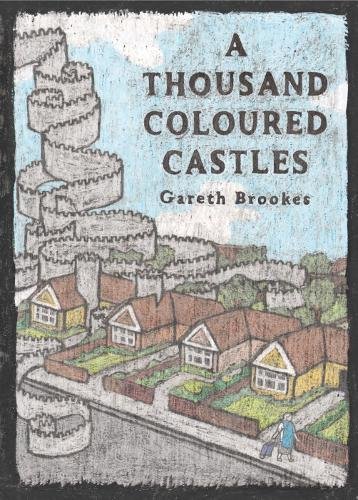
A new graphic novel has been published where the lead character, Myriam, has entered the world of Charles Bonnet syndrome.
Set in suburban England, it focuses on an elderly couple: vision-impaired Myriam and her grumpy husband, Fred. The story follows Myriam's journey “ an interweaving of some strange happenings at the next door neighbour's house as well as her own unfolding CBS. All this occurs while Myriam is trying to get on with her routine lifestyle. We follow Myriam as these three narratives coalesce into a fascinating whole.
A Thousand Coloured Castles captures the various shades of the CBS experience: the vividness and bizarre nature of the imagery encountered, the often isolating experience for the person living with the syndrome, how loved ones can react to the unfamiliar, and where the difference between truth and fiction can become blurred.
The real beauty of this offering from Gareth Brookes is that it cuts through the standard clinical jargon that most commentaries on CBS are based. With a simple story-telling format, Brookes' work is easily accessible to all age groups. This makes it a very useful medium to introduce someone to CBS “ especially a grand child who has a grand-parent (or other older relative) who may be living with the condition. Brookes achieves this through an engaging child-like pictorial form, rendered in rich crayon.
To purchase (or learn more about) the book, follow the below link to the publisher, Myriad Editions.
http://www.myriadeditions.com/books/a-thousand-coloured-castles/
The American and Canadian edition is available through Penn State University Press:
https://www.psupress.org/books/titles/978-0-271-07927-1.html

Brookes broaches hallucinations, illusions and jumping to conclusions (A review by Jennifer Muirden)
Six years ago, I was approached by the Charles Bonnet Syndrome Foundation to create some images for their website to accurately depict the visual hallucinations experienced by people who have impaired vision but are otherwise mentally intact. It was a difficult challenge for me since I have never experienced such phantom visions. However, more importantly, I had no real reference point due to a scarcity of visual media illustrating this much overlooked and misunderstood medical condition. It is for this reason I was delighted to read A Thousand Coloured Castles by Gareth Brookes (not to be confused with the American singer and songwriter Garth Brooks), published by Myriad Editions.
A Thousand Coloured Castles is worthy of recognition since it combines wit and a multimodal approach to effectively illustrate the phantom images that a person with the enigmatic neurological condition of Charles Bonnet syndrome may expect to see, but also manages to draw attention to the loneliness and isolation that many elderly people face.
Renowned neurologist Oliver Sacks notably wrote the acclaimed bestseller Hallucinations back in 2012 based on anecdotal descriptions of the intricate apparitions experienced by those of his patients afflicted with Charles Bonnet syndrome and also from his own experience. While his prose narrative undoubtedly educated and intrigued a wide audience, it is the highly imaginative visual component of Brookes' book that for me enhances the narration with more power and economy ultimately delivering a more memorable and accessible message.
An added surprise for me was a feeling of unsettling anxious anticipation that gripped me while the story about Myriam and her rapidly declining vision unfolds and becomes very much a suspense thriller. It is the subtle alchemy of speech bubbles and wax crayon pictures cleverly created by Brookes which educates and engages its audience with the intention of fostering greater understanding, discourse, empathy and a reduction in anxiety for both Charles Bonnet syndrome sufferers, and their loved ones. In this fashion, it may help people gain acceptance of this legitimate condition and learn to live with less fear or automatically assume they are losing their mind.
There's one thing for certain A Thousand Coloured Castles will go a long way in establishing the comic book format as a viable form of educational literature dealing with a serious and substantial issue rather than standard comic books which are so often concerned with superheroes, science fiction, fantasy or lightweight subject matter.
Page 9 of 14
The Charles Bonnet Syndrome Foundation is dedicated to raising awareness of CBS, what signs to look out for and how to better manage this condition.
As a charitable organisation, we rely principally upon memberships and donations to continue our work.
Please help us to support more people affected by CBS.